Small Pets

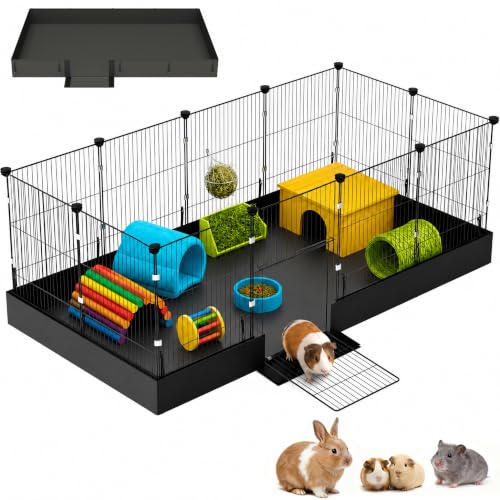
SNAAT Guinea Pig Playpen with Waterproof Liner
The starter build — open-top panels with the chew-proof outside-hung liner.
4.1(465)
2 builds
$26.94

Landlords to the little ones
Wire panels that click into whatever corner your home can spare, waterproof liners that keep the floor out of the story, and a door the tenant can use whenever visiting hours allow. Guinea pigs, rabbits, hamsters, cats, budgies — everybody gets keys.
9 items · from $26.94

Pick a wing
The ground-floor wing
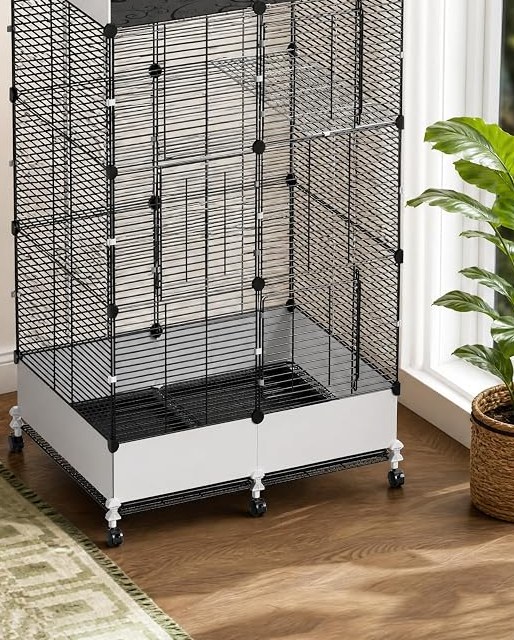
Guinea pigs, rabbits and hamsters move into panel-built pens with a SNAAT signature: the waterproof liner hangs outside the wire frame, where teeth can't reach it, hooked on so it lifts off for cleaning in one motion. Open-top runs for the supervised, fully enclosed 0.6-inch mesh builds for the escape artists — every layout snaps together without tools.
The tower wing
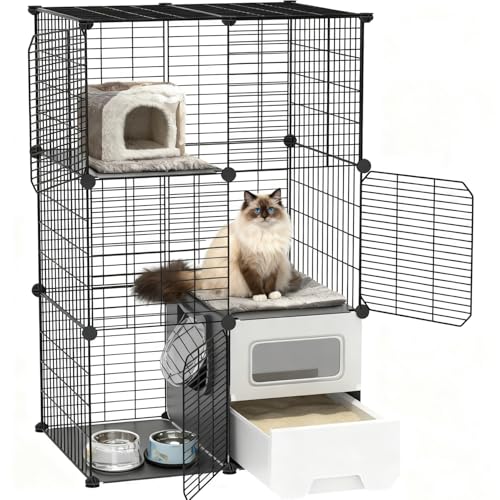
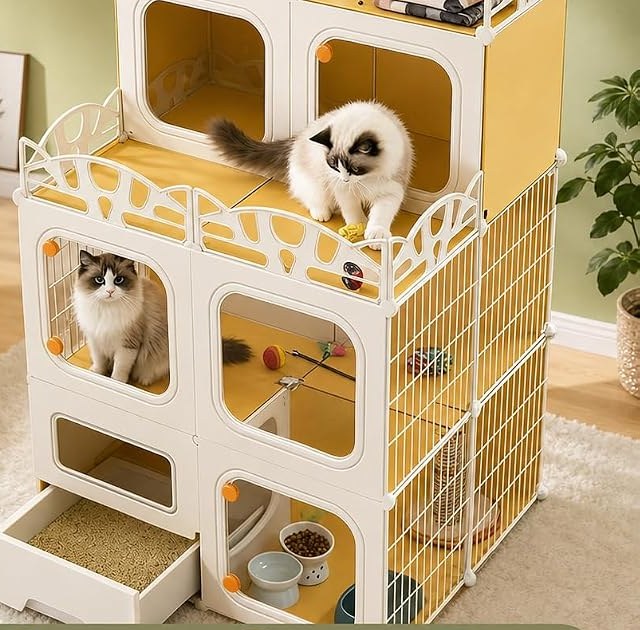
Cat quarters here think vertically: a three-tier crate with platforms to climb, a hammock playpen with double doors, and the flagship suite with a built-in litter drawer that cleans from outside and a storage-topped roof you can actually play with a cat through. Modular units connect when one room stops being enough.
The atrium
The tallest room in the building: a 57-inch aviary with a storage shelf up top for seed and toys, a wide splash guard below that keeps the floor out of the seed business, quick-open doors for daily visits, and the starter furniture — bowls, ladders, swings, a nest — already in the box.
Panels versus pet-store boxes
A store-bought cage is one decision made forever. A panel build is a floor plan you keep editing — and the differences show up exactly where a small animal's life does.
| SNAAT panel builds | Store-bought cages | |
|---|---|---|
| Grows when the tenant does | ✓ | ✗ |
| Fits odd corners and narrow walls | ✓ | ✗ |
| Waterproof liner in the box | ✓ | Rarely included |
| Liner hangs chew-proof outside the frame | ✓ | ✗ |
| Tool-free assembly | ✓ | Screws and patience |
| Flat-packs for moving day | ✓ | Bulky forever |
| Connects to the next enclosure | ✓ | ✗ |
The full argument, with measurements, lives in the house note 'How much room do they actually need'.
Every room on one board
Nine rooms, three wings, one board. Rents are the sellers' own numbers at last inspection — the buttons open the live listings where today's figure hangs.
| The room | Wing | The pitch | Rent today | Sign the lease |
|---|---|---|---|---|
| Open-top pen with liner | Small pets | The starter build | $26.94 | View the room |
| The larger open build | Small pets | More floor for more pigs | $48.99 | View the room |
| Enclosed cage, solid roof | Small pets | For the escape artists | $35.99 | View the room |
| Enclosed cage, skylight roof | Small pets | Escape-proof, still sunny | $37.99 | View the room |
| 32-panel run with floor mat | Small pets | The rabbit-sized estate | $59.99 | View the room |
| Hammock playpen, dual doors | Cats | The starter suite | $39.99 | View the room |
| Three-tier crate | Cats | Vertical living | $54.99 | View the room |
| Litter-drawer suite with play roof | Cats | The flagship | $69.99 | View the room |
| 57-inch aviary with storage top | Birds | The atrium | $57.99 | View the room |
Newer rooms carry young rating counts — the wing pages say which, plainly.
The room most tours start in
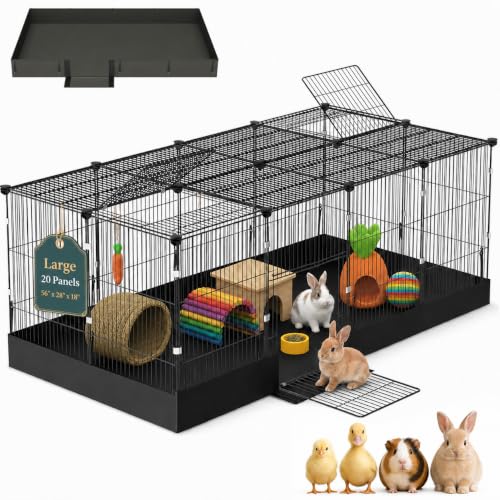
Guinea pigs measure wealth in unbroken floor, and this is the line's largest open layout — panels enough to give a pair the long straightaways they actually run, with the chew-proof outside-hung liner keeping your floor dry underneath it all. Rated 4.1 stars across 465 tenants' humans.
Keys in ten minutes
Count your corner's inches, then arrange the panels flat on the floor like a blueprint — long runs beat clever mazes for anything that likes to sprint. The grid connectors don't care whether you build a rectangle, an L, or a full room-divider.
Panels snap into the connectors by hand — no tools, no hardware bag, no instruction-sheet grief. The liner hangs on its hooks outside the finished frame, where teeth never reach it, and drops into place with the door cutout already measured.
Bedding in, hay rack up, tenant introduced to the premises. Cleaning day reverses one step only: unhook the liner, shake it out, hook it back. The walls stay standing — this lease renews itself.
The tallest lease in the building
The atrium solves the two things bird cages always forget: where the seed and toys live (a full storage shelf on top), and where the mess lands (a wide splash guard that keeps hulls off your floor). Doors open quick for morning visits, and the starter furniture — bowls, ladders, swings, a nest — is already in the box.
Tour the atrium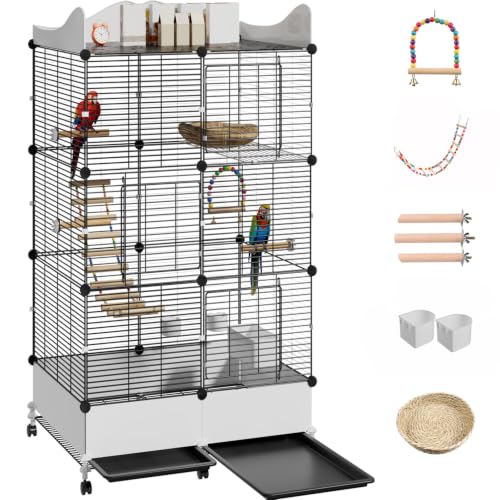
High demand
The starter build — open-top panels with the chew-proof outside-hung liner.
The line's largest open floor — straightaways long enough for actual zoomies.
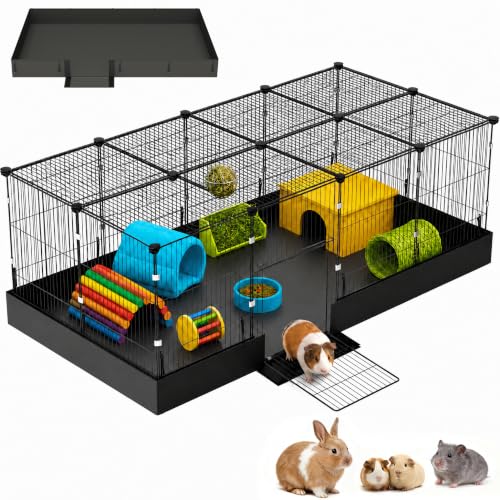
Fully enclosed, 0.6-inch mesh — the room that ends the midnight jailbreaks.
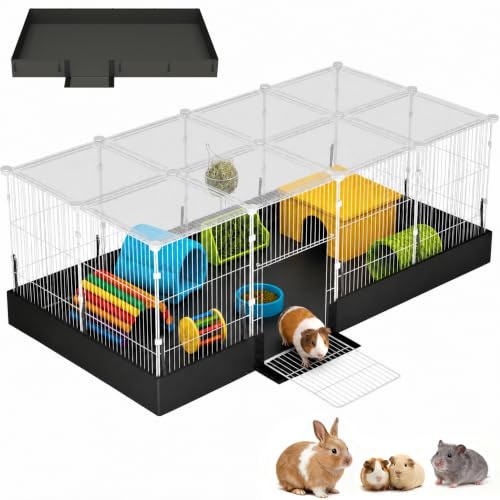
The same escape-proof shell, with daylight pouring through the roof.
57 inches of atrium — storage above, splash guard below, furniture included.
Three storeys, two platforms, litter quarter downstairs — 41 inches of cat.
The long lease
Every pet-store aisle sells the same compromise: a box sized for the shelf it ships on, not the animal it will hold. Panel-built enclosures flipped that arithmetic — buy walls by the piece, assemble a floor plan that fits both the tenant and the corner you can spare, and re-shape it the day either one changes.
SNAAT's catalog covers that idea across three species' worth of housing: modular pens and enclosed cages for guinea pigs, rabbits and hamsters; stacked and connectable suites for cats; and a full-height aviary for birds. What follows is the practical part — sizes, materials, and the honest trade-offs.
Most cage liners fail one of two ways: the animal chews the edge, or the cleaning routine is such a production that it happens less often than it should. Hanging the waterproof liner outside the wire frame retires both problems at once — teeth meet wire, never fabric, and the hooks mean the whole floor lifts out, shakes off, and returns in under a minute.
The liner arrives cut for the door, too, so the entrance works from day one without scissors or guesswork.
Open-top pens suit supervised ground-floor living: easiest access, best airflow, simplest cleaning. The fully enclosed builds trade a little convenience for security — 0.6-inch mesh dense enough to hold the determined and to keep other household residents out. The skylight version keeps the roof but makes it transparent, for tenants who do better with daylight overhead.
The honest rule: climbers and escape artists get roofs; placid grazers with no cats in the house usually don't need one.
The panels are coated metal grids on plastic connectors — the same architecture the C&C (cubes-and-coroplast) community has trusted for two decades, packaged with the liner and connectors in one box instead of three store runs. Assembly is genuinely tool-free: panels seat into connectors by hand, and disassemble the same way for moving day.
Several rooms in this building are new to Amazon and carry small rating counts — a few dozen voices, not a few hundred. The board shows every count as it stands, because eight ratings is information too: it means early, not bad. Where the crowd is thin, weigh the listed measurements and the photos harder than the stars.

The paper trail
Measurements, mesh sizes and mechanisms here come from the maker's own listings; the housing standards come from the communities that wrote them. Walk past us to any of it.
The brand's full room catalog — every dimension, mesh spec and what's-in-the-box list cited on these pages traces to their listings.
amazon.com ↗The C&C canonGuineaPigCages.com — the original cubes-and-coroplast guideThe community text that established panel-built housing and the floor-space standards this site quotes for guinea pigs.
guineapigcages.com ↗Housing standardsGuineaDad — the ultimate C&C cage guideA specialist maker's long-form take on sizing, layouts and why floor area beats furniture — useful second opinion to the canon.
guineadad.com ↗Every rent figure and rating count on the board comes from the live listings on this dated pass — and every button opens the page to out-check it.
The landlord's desk
One household keeps this building, and the routine is fixed: pull every measurement and material claim from the maker's own listings rather than memory, check the floor-space numbers against the C&C community standards that predate every brand in the niche, and pull rents and rating counts from the live Amazon pages on a dated pass. Where a listing is young and thinly rated, the page says so instead of rounding up the enthusiasm.
The commission disclosed at the bottom of every page is the desk's entire income. It pays the same whether a reader takes the $26.94 starter pen or the flagship suite — which is the only arrangement under which honest room descriptions stay honest.
When something drifts — a rent, a packaging photo, a listing gone quiet — a note under the door gets it fixed before anything else on the ledger.
— the landlord
Inspected and dated
Anything stated as a number or a mechanism on these pages is pinned below to its source and its inspection date. A claim that stops matching its source gets rewritten, not defended.
Spot one drifting before the next inspection? Slip a note under the door — keys@snaatus.com.
The tenants' board
“We went from a pet-store cage to the big open build and our two sows started popcorning laps the first evening. The liner unhooks, shakes out over the compost, hooks back — cleaning went from chore to chore-ette.”
“Our hamster had escaped three cages before this one. The mesh is tight enough that he finally retired from crime, and the enclosed roof means the cat has stopped filing complaints for access.”
“The storage shelf on top of the aviary is the feature nobody advertises loudly enough — seed, spray, toys, all off my bookshelves. And the splash guard means I stopped vacuuming hulls off the rug every second day.”